Read Time: 9 min
Adding a structure to your outdoor living space is a significant investment, and the choice often comes down to a fundamental question: do you want a temporary fixture or a generational landmark? For many homeowners, the generic, pressure-treated kits found at big-box stores fail to provide the character or structural integrity required for a truly custom backyard retreat.
Timber frame pavilions offer a solution that combines old-world architectural beauty with modern structural performance. By utilizing heavy timbers and traditional joinery, these structures provide a level of durability and aesthetic appeal that standard “stick-built” or bracketed structures simply cannot match.
In this guide, we will explore the anatomy of these structures, the engineering standards that ensure their longevity, and the specific foundation requirements for outdoor living in Pennsylvania.
TL;DR / Quick Summary
Timber frame pavilions are heavy-duty outdoor structures built using traditional mortise and tenon joinery, offering superior wind resistance and a timeless aesthetic compared to standard kits.
- Structural Anatomy: Understanding bents, plates, and knee braces is key to a well-engineered frame.
- Material Excellence: Hemlock is the preferred species for outdoor structures due to its natural rot resistance and strength.
- Engineering for Longevity: Proper roof overhangs and wicking prevention at the base ensure a 50+ year service life.
- The Foundation: Specialized anchoring systems are required to secure heavy timber structures against frost and wind.
The Anatomy of a Timber Frame Pavilion
To appreciate the engineering of a timber frame, one must understand the individual components that work together to create a rigid, self-supporting skeleton. Unlike modern framing, which relies on hundreds of small nails, a timber frame relies on a few massive components. At Crickside Timber Craft, we believe that understanding our work starts with understanding the frame itself.
The Bents: The Ribs of the Structure
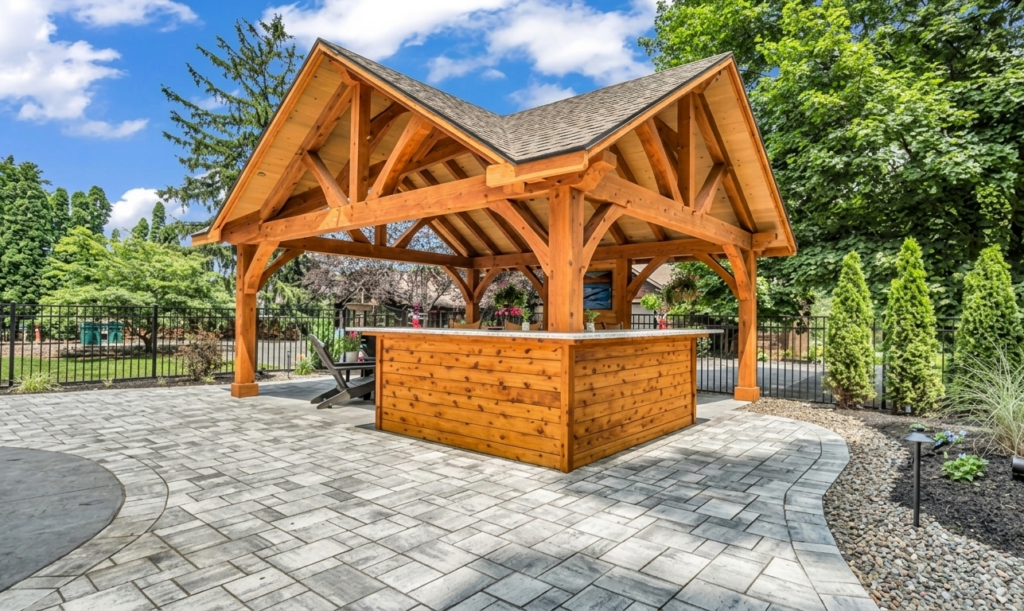
A “bent” is a cross-section of the timber frame, assembled on the ground and raised into place. It typically consists of two posts, a tie beam connecting them, and the rafters above. The number of bents determines the length of your pavilion; a standard 12×16 pavilion usually utilizes two or three bents.

Plates and Purlins: The Longitudinal Strength
While bents provide the width, Plates run the length of the structure, connecting the bents together. Purlins are the smaller horizontal timbers that sit atop the rafters to support the final roofing material. In a Crickside frame, these are sized specifically to handle Pennsylvania snow loads without sagging.
Knee Braces: Preventing "Racking"
Perhaps the most critical component for an open-sided structure is the knee brace. These are the diagonal timbers located at the corners where posts meet beams. Their job is to prevent “racking” — the side-to-side swaying caused by wind. In a timber frame, these braces are mortised into the main timbers, creating a triangular reinforcement that is far stronger than any metal corner bracket.
Engineering for Longevity: Why Our Structures Last
Because a pavilion is open to the elements, it faces different engineering challenges than a fully enclosed home. We follow specific structural standards to ensure the wood remains healthy for decades.
1. Managing Wind Load and "Uplift"
An open pavilion acts like a sail during a storm. Wind gets underneath the roof and creates “uplift,” attempting to pull the structure off its foundation. We engineer our frames with heavy 8×8 or 10×10 Hemlock posts. The sheer mass of these timbers, combined with deep-seated joinery, provides the ballast and structural rigidity needed to remain stationary in high-wind environments.
2. Protecting the End Grain
The most vulnerable part of any timber is the “end grain” at the bottom of the posts. Wood acts like a bundle of straws; if the bottom of a post sits in a puddle of water, it will “wick” that moisture up into the heart of the timber, leading to rot.
- The Solution: We utilize specialized anchoring systems such as knife plates or elevated post bases. These keep the timber 1 to 2 inches off the concrete surface, allowing air to circulate underneath and ensuring the wood stays dry.
3. Strategic Roof Overhangs
A common design flaw in budget kits is a shallow roof overhang. We design our pavilions with a minimum 12-to-18-inch overhang. This ensures that most rainfall is shed well away from the main posts and joinery, significantly extending the life of the finish and the wood itself.
Foundation and Anchoring Systems
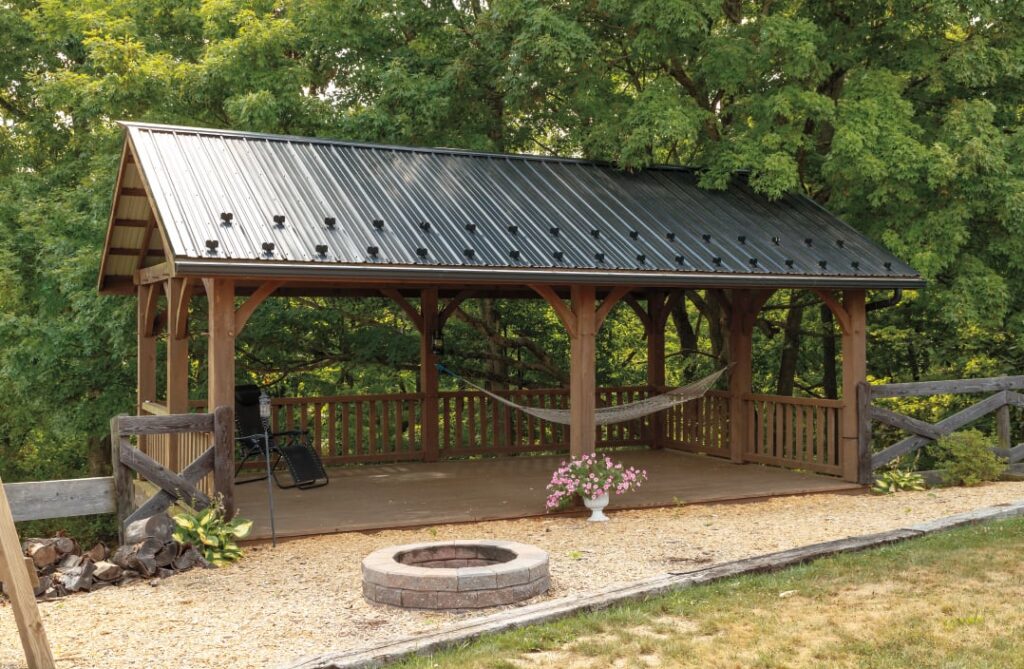
A timber frame pavilion cannot simply sit on a bed of gravel. Because of the concentrated weight at each post, a dedicated foundation system is required.
Sonotubes and Concrete Piers
In Pennsylvania, foundations must extend below the frost line (typically 30–36 inches) to prevent the ground from heaving and tilting the structure. We typically anchor our pavilions to concrete piers or a reinforced concrete pad.
Hidden Structural Anchors
For clients who want a clean, all-wood look, we can utilize hidden structural anchors. These involve a steel plate slotted into the center of the post and bolted through, with the bolt heads later covered by wooden plugs. This provides the necessary uplift protection required by building codes while maintaining the traditional aesthetic of the frame.
Hemlock: The Workhorse of the Pennsylvania Outdoors
At Crickside Timber Craft, we primarily utilize Eastern Hemlock for our outdoor pavilions. Hemlock is the ideal choice for outdoor living — strong, locally sourced, and naturally beautiful. You can learn more about our selection process on our materials page.
- Natural Durability: Hemlock contains natural tannins that help it resist decay and insects.
- Aesthetic Aging: It takes stains exceptionally well, allowing you to match your home’s trim, or it can be left to weather into a classic rustic gray.
Conclusion
A timber frame pavilion is an architectural statement that provides a permanent center for outdoor life. By understanding the anatomy of the frame and the engineering required to protect it from the elements, you can ensure your investment remains a landmark on your property for generations. To learn more about our history and commitment to the craft, visit our about us page.
Contact Crickside Timber Craft today to discuss your outdoor living project.
Serving Harrisburg, Carlisle, Chambersburg, State College, and the surrounding Central Pennsylvania region — with structures delivered throughout PA, MD, VA, and WV.
Frequently Asked Questions
How long does a timber frame pavilion last?
When built with proper joinery and a durable species like Hemlock, a timber frame pavilion can easily last 50 to 100 years. The key is proper foundation anchoring and maintaining a quality roof.
Does a timber frame pavilion need a foundation?
Yes. Due to the immense weight of the heavy timbers and the need for wind-uplift protection, these structures require concrete piers or a reinforced pad that extends below the frost line.
Can I add a fireplace to my pavilion?
Absolutely. Timber frame pavilions are ideal for outdoor fireplaces. We coordinate the roof framing to ensure proper clearance for the chimney and ensure the foundation is reinforced for the masonry weight.
Is Hemlock better than Cedar for pavilions?
Cedar is naturally rot-resistant, but Hemlock offers a superior strength-to-weight ratio for the long spans required in pavilion roofs. In the Northeast, Hemlock is often the preferred choice for its structural performance and local availability.
Do I need to stain my timber frame?
While not strictly required for structural integrity, a high-quality UV-resistant stain prevents the wood from graying and adds a critical layer of moisture protection for outdoor structures.
External Resources
- Timber Framers Guild — Standards for traditional timber frame anatomy and terminology.
- American Wood Council — National Design Specification for Wood Construction (NDS).