Read Time: 13 min
When planning an outdoor living space, one of the most common dilemmas homeowners face is choosing between a pergola and a pavilion. Both offer a way to define a backyard area and add architectural interest, but they serve very different functional purposes.
Choosing the right structure depends on how you intend to use your space, your local climate, and the level of weather protection you require. In this guide, we will break down the differences between timber frame pergolas and pavilions to help you determine which fits your lifestyle and property best.
TL;DR / Quick Summary
Pergolas provide dappled shade and an open-air feel, while pavilions offer full roof coverage and complete protection from rain and sun. Specialized designs like the Lurgan Pergola offer a middle ground with integrated rain protection.
- Weather Protection: Pavilions offer 100% rain protection; standard pergolas offer partial shade.
- Roofing Options: Pavilions can be customized with Hip or A-frame roofs using shingles, standard rib, or premium standing seam metal.
- Hybrid Options: The Lurgan Pergola features a flat rubber roof for those who want a pergola aesthetic with pavilion-level protection.
- Customization: Both can be customized “A to Z” with traditional timber frame joinery to match any architectural style.
Understanding the Core Differences
The primary distinction between the two structures lies in the roof. At Crickside, we offer several models that bridge the gap between these two categories.
The Timber Frame Pergola
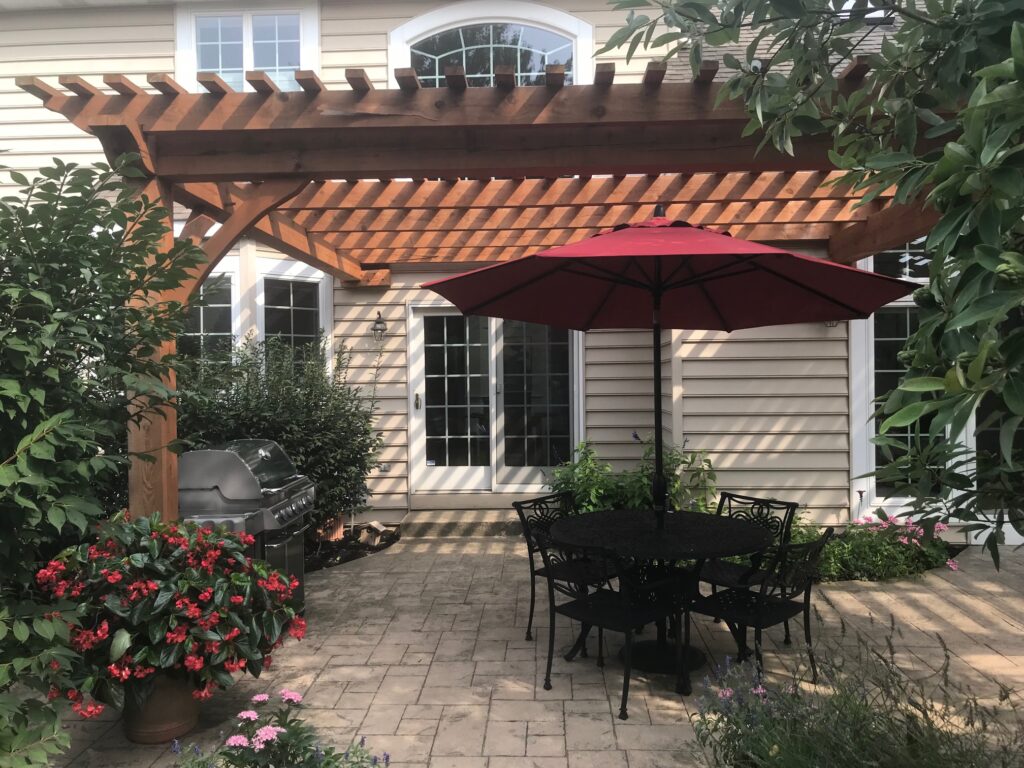
A standard pergola features an open-grid roof made of cross-beams and rafters. It is ideal for creating a “room” feel without blocking the sky or supporting climbing vines. We offer these in sizes ranging from 8′ x 10′ up to 16′ x 30′. Homeowners can choose between a Rustic finish, which requires no maintenance and weathers naturally, or a Clean finish, which provides a more polished look with maintenance required every 3–8 years.
One consideration worth being direct about: open-roof pergolas have a finite lifespan when exposed to full weather cycles year over year. In our experience building timber structures across Central Pennsylvania since 2004, we’ve seen unprotected pergolas show significant structural decay within 8–12 years — and we’re dealing with that reality on structures we built a decade ago. If longevity is a priority, a covered option like the Lurgan Pergola or a full pavilion is worth serious consideration. If you love the open pergola aesthetic, we can also incorporate a clear polycarbonate roof panel that preserves the look while protecting the structure.
The Timber Frame Pavilion
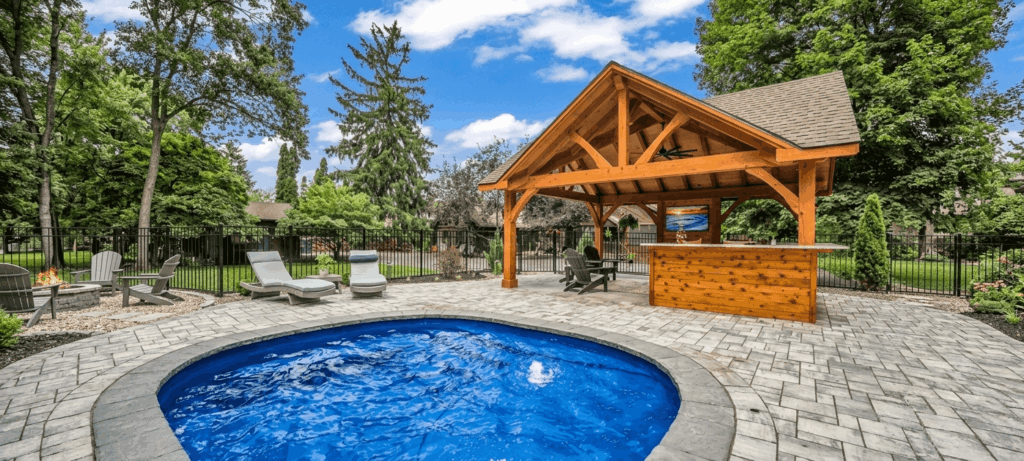
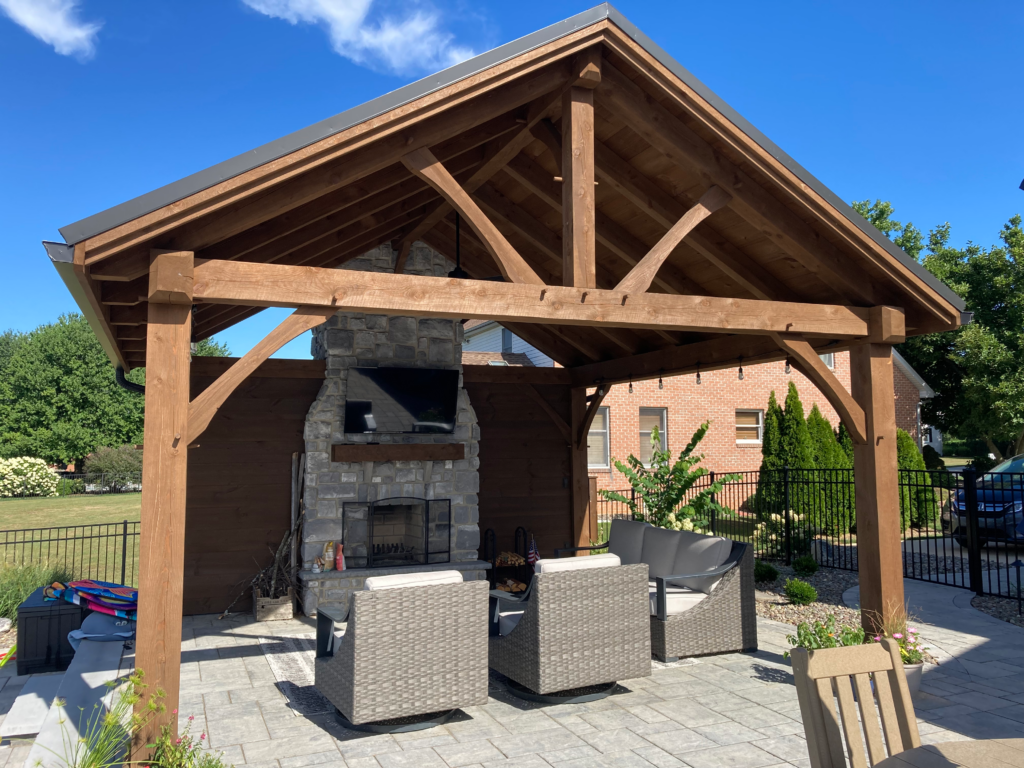
A timber frame pavilion is a permanent structure with a fully finished, solid roof — essentially an outdoor room without walls, perfect for outdoor kitchens and lounges where electronic equipment must stay dry. Unlike pergolas, pavilions allow for distinct architectural roof styles, including the Hip roof (sloping upward from all sides) and the A-frame roof (the classic inverted “V” shape).
Hybrid Solutions: The Lurgan and Octagon Models
For those who find themselves caught between the two styles, we offer specialized designs that provide the best of both worlds.
The Lurgan Pergola: The Rain-Ready Pergola
The Lurgan Pergola is a unique hybrid designed for homeowners who love the decorative rafter and lathe-edge look of a pergola but need actual weather protection. It features a built-in flat rubber roof and a drip edge to keep the area underneath dry. We even recommend optional gutters for this model, especially if you plan on installing electrical setups or outdoor speakers.
The Octagon Pergola: A Focal Point for Fire Pits
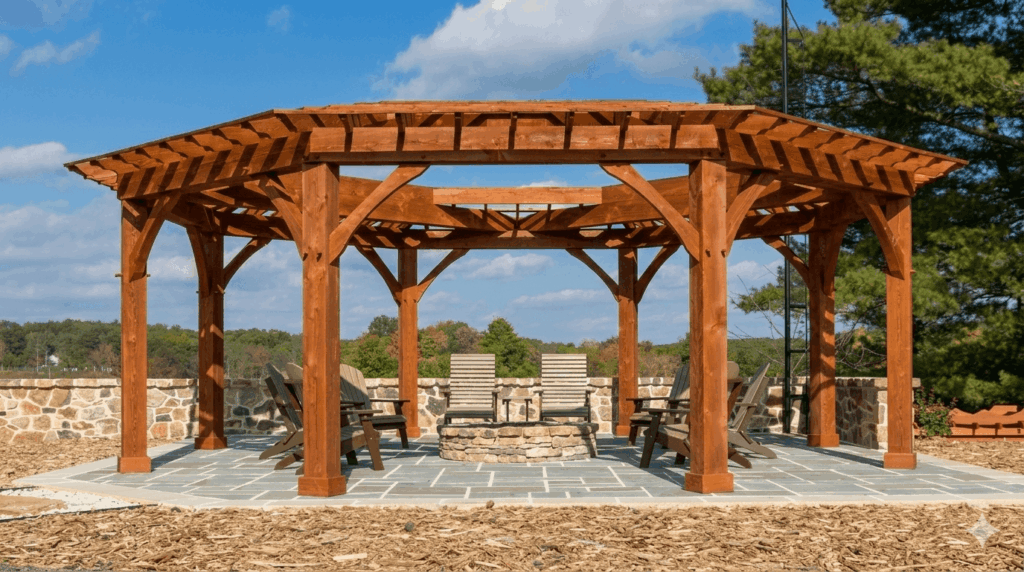
Our Octagon Pergolas offer an 8-sided design utilizing the same high-end mortise and tenon craftsmanship as our largest barns. Available in sizes up to 30′, they come with two roof options: a fully covered roof for total shade, or an Open Center design engineered to sit over a fire pit, allowing smoke to rise freely while still providing perimeter coverage.
Side-by-Side Comparison Matrix
| Feature | Standard Pergola | Lurgan/Octagon Hybrid | Timber Frame Pavilion |
|---|---|---|---|
| Roofing | Open rafters | Rubber roof or Covered Octagon | Shingles, Rib, or Standing Seam |
| Sun Protection | Partial (dappled) | Full | Full |
| Rain Protection | None | High (Lurgan) | 100% |
| Best Use Case | Garden accent | Fire pits / Hybrid needs | Full outdoor kitchens |
| Foundation | Post anchors | Piers or Pad | Concrete piers or Pad |
Seasonal Versatility: Extending the Outdoor Year
In Central Pennsylvania, our outdoor season is often cut short by early spring rains or late autumn chills. A pavilion is effectively a “three-season” room — the permanent roof lets you install infrared heaters or a custom stone fireplace without worrying about the elements.
Standard pergolas are the masters of the “Summer Sanctuary.” Because they are entirely open, they allow for maximum airflow. In the peak of a humid July, a pavilion roof can sometimes trap warm air underneath; a pergola lets every breeze pass through, making it the perfect poolside companion.
Integration: Kitchens, Power, and Roofing Materials
If your dream includes a built-in grill, pizza oven, or outdoor bar, the pavilion or the Lurgan Pergola are the superior choices. A solid roof protects high-end appliances from UV damage and moisture.
When choosing a pavilion, the roofing material impacts both longevity and atmosphere:
- Standing Seam Metal: Our top-of-the-line option — no exposed fasteners, lifetime warranty.
- Standard Rib Metal: Cost-effective with a classic look and 40-year paint warranty.
- Shingle Roofing: The quiet choice — dampens rain sound, 35-year warranty, matchable to your existing roof color.
Materials: Hemlock vs. Douglas Fir
At Crickside Timber Craft, we believe the soul of the structure is in the wood. Eastern Hemlock is our go-to material for most Pennsylvania projects — locally sourced, incredibly strong, and featuring a beautiful rustic grain. For clients seeking enhanced structural stability or a refined aesthetic, we offer Douglas Fir as a premium option. Douglas Fir has one of the highest strength ratings of any softwood, is exceptionally stable and less prone to checking over time, and features a warm reddish-orange hue many homeowners prefer for high-end projects.
"A to Z" Customization: If You Can Dream It, We Can Build It
Because we are true timber framers and not kit-builders, our structures can be customized from A to Z. We can match the roof pitch of your pavilion to your home’s roofline and, in most cases, match your existing shingle color so the new structure looks like an original part of the property. Whether you need a custom footprint or specific joinery details that reflect your personal style, your structure is built specifically for you.
Conclusion
There is no “better” structure — only the structure that best serves your vision for your home. A pergola offers an elegant, open-air retreat, while a pavilion provides a robust, all-weather sanctuary. To learn more about our history and commitment to the craft, visit our about us page.
Contact us today to start your design.
Serving Harrisburg, Carlisle, Chambersburg, State College, and the surrounding Central Pennsylvania region — with structures delivered throughout PA, MD, VA, and WV.
Frequently Asked Questions
Can I add a roof to a pergola later?
It is generally not recommended. Standard pergolas are engineered for their own weight; adding a solid roof creates uplift and weight the original posts may not be designed to handle. If you want a roof, it is best to start with a pavilion or a Lurgan Pergola design.
Which structure adds more property value?
Both add value, but pavilions and covered hybrids often see a higher return because they are viewed as additional square footage for living and entertaining.
Do pergolas provide enough shade?
A standard pergola provides dappled shade. By spacing the top slats closer together, we can increase the shade percentage, but it will never provide the total cooling effect of a solid pavilion or a covered Lurgan or Octagon roof.
How do I choose between Hemlock and Douglas Fir?
Hemlock is ideal for a rustic, local look and is very cost-effective. Douglas Fir is preferred for its refined grain, reddish color, and superior resistance to cracking over time.
Do I need a permit for these structures?
In most Central Pennsylvania townships, any permanent structure over a certain square footage requires a permit. We recommend checking with your local municipality during the planning phase.
Resources
- Timber Framers Guild — Comparison of outdoor timber structures.
- American Wood Council — Structural standards for open-air wood buildings.